
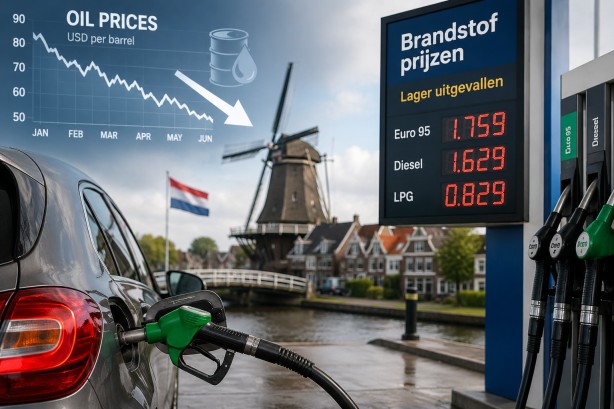
Oil prices have taken a significant dip following the cessation of military strikes between the United States and Iran, which is expected to lead to decreased fuel costs in the Netherlands soon. Brent crude, a major benchmark for oil pricing, has seen a decline, dropping from more than €88 per barrel at the end of last week to just over €81.
This price reduction is further supported by a stronger euro, which makes oil imports cheaper for European buyers since oil transactions are conducted in US dollars. The currency advantage comes at a crucial time, as fuel prices in the Netherlands have been on the rise since the conflict involving Iran intensified in late February.
Despite the fall in crude prices, the advisory gasoline price in the Netherlands remains high at €2.634 per liter. This is only slightly below the record high of €2.646 per liter that was set earlier this year. However, analysts are optimistic that the current drop in oil prices will eventually trickle down to fuel stations, though they caution that retail prices often lag behind changes in global oil markets.
The anticipation of lower fuel prices brings a sliver of relief to consumers who have been grappling with the impacts of the earlier surge in oil prices. As the market adjusts, it is expected that fuel costs will follow suit, albeit with a delay typical of retail price adjustments in response to global oil trends.