
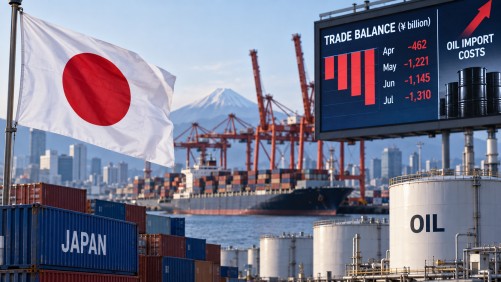
Japan experienced a trade deficit of approximately 1.1 trillion yen ($7 billion) in August, marking the fourth consecutive month of trade shortfalls. This development is primarily attributed to escalating oil prices, which have significantly increased the cost of imports, according to preliminary data from Japan’s Finance Ministry.
The country saw a notable 28% increase in imports from the previous year, rising to 11.15 trillion yen ($71.9 billion). The surge is largely due to heightened energy costs, as geopolitical tensions in the Middle East have disrupted oil supplies and shipping routes, affecting Japan, which heavily relies on imported energy. In particular, disruptions around the strategic Strait of Hormuz have compounded the pressure on Japan’s import expenses.
Exports from Japan also rose, climbing 19.3% year-on-year to reach 10 trillion yen ($64.5 billion). This increase was driven by strong performance in the automobile and computer chip sectors. Notably, exports to the United States grew by 24.9%, while imports from the U.S. surged by 55.2%. Trade with European countries also saw an uptick, with exports increasing by 11% and imports by 20.4%.
However, Japan’s trade with the Middle East presented a different picture, with exports declining by 5.2% and imports decreasing by 4.2%. This reflects a downturn in trade activities amid ongoing regional instability.